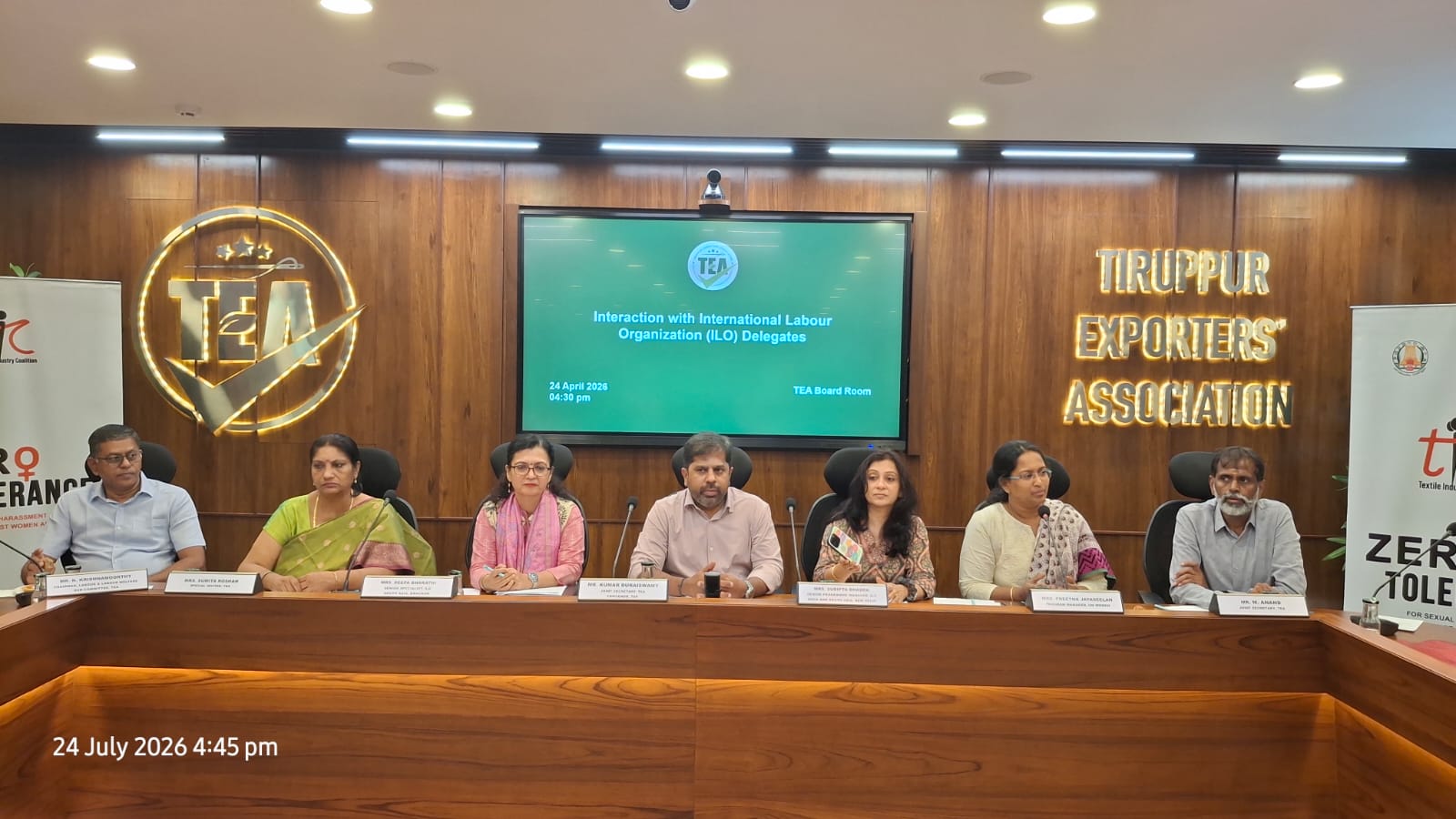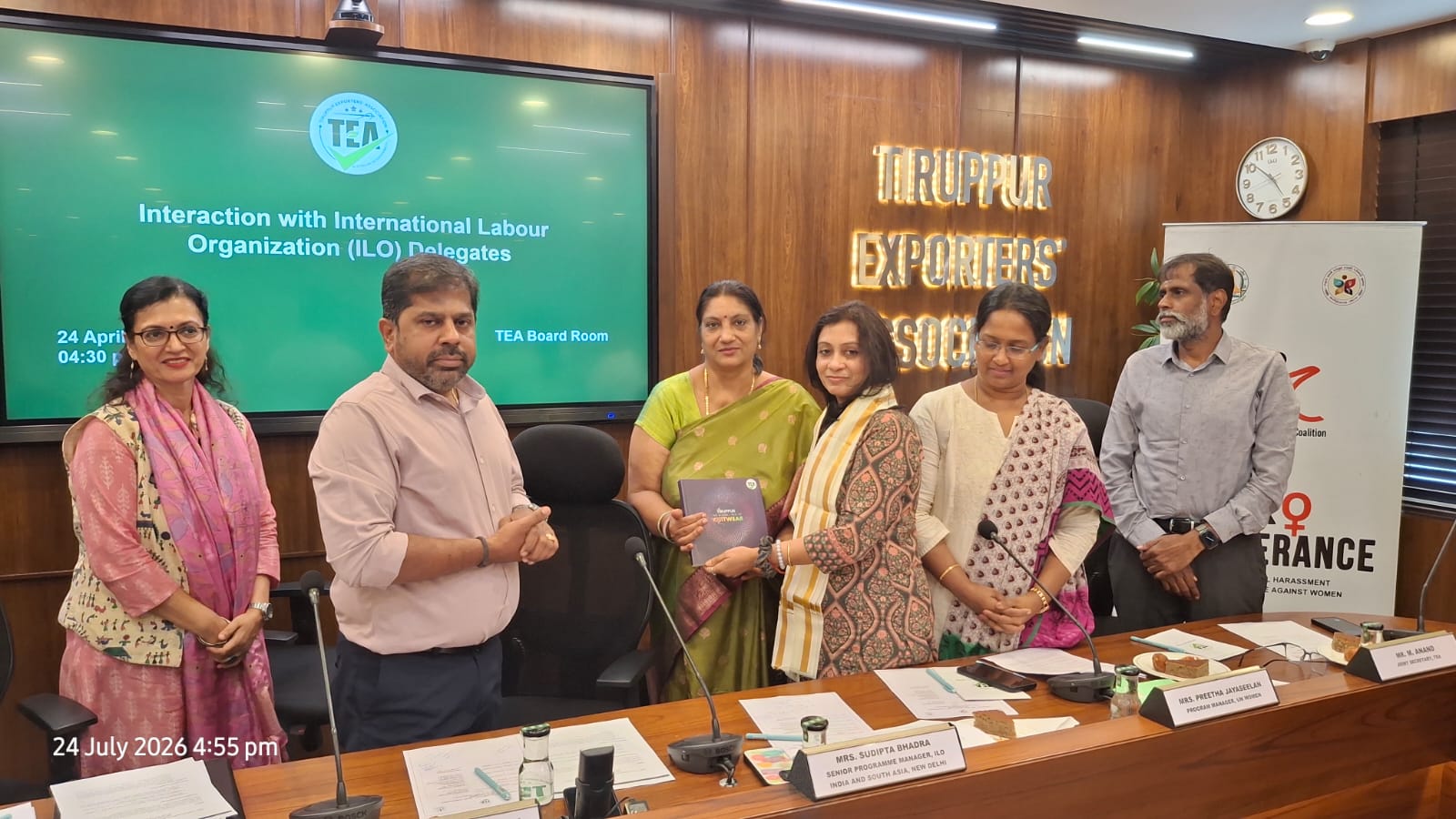
Mrs. Preetha Jayaseelan, Program Manager, UN Women, welcomed the participants and thanked the Tirupur Exporters Association (TEA) for organizing the interaction. She highlighted that the Textile Industry Coalition (TIC), supported by UN Women and the ILO, promotes safe workplaces for women through a zero-tolerance approach to sexual harassment and gender based violence. She emphasized that preventing sexual harassment is a workers’ rights issue and underscored the important role of trade unions in strengthening POSH implementation and creating awareness among workers.
Mr Kumar Duraiswamy, Joint Secretary, TEA, Convenor, TSF in his special address said the remarkable growth of Tirupur’s knitwear industry has been achieved through the combined efforts of entrepreneurs and workers. He acknowledged the significant contribution of trade unions in safeguarding workers’ rights and welfare and emphasized the need to strengthen awareness on women’s safety and effective implementation of the POSH Act through continuous training and outreach programmes. He also highlighted TEA’s commitment to the welfare of migrant workers by advocating for better housing, education, and other welfare measures, while reiterating that worker welfare and industrial growth must progress together.
Mrs. Sudipta Bhadra, Senior Programme Manager, ILO India and South Asia, said the International Labour Organization (ILO), as a tripartite UN agency representing governments, employers, and workers, promotes collaborative solutions to workplace issues. She emphasized the need for a proactive approach to prevent sexual harassment, stressed the importance of dialogue in resolving workplace concerns, and highlighted the need to strengthen women’s participation in decision-making. She also underscored that economic growth must be accompanied by decent work and safe, inclusive workplaces for all.
Mrs. Deepa Bharathi, Senior Specialist, ILO South Asia, Bangkok, said the ILO works closely with governments, employers, and trade unions to promote gender equality, and safe workplaces. She highlighted that language barriers, lack of awareness, and social vulnerabilities increase the risk of workplace exploitation, particularly among migrant workers. Appreciating India’s POSH Act and the collaborative efforts of Tirupur’s textile industry, she emphasized the need to adopt best practices that ensure worker safety, dignity, fair wages, and social justice while supporting sustainable industrial growth.
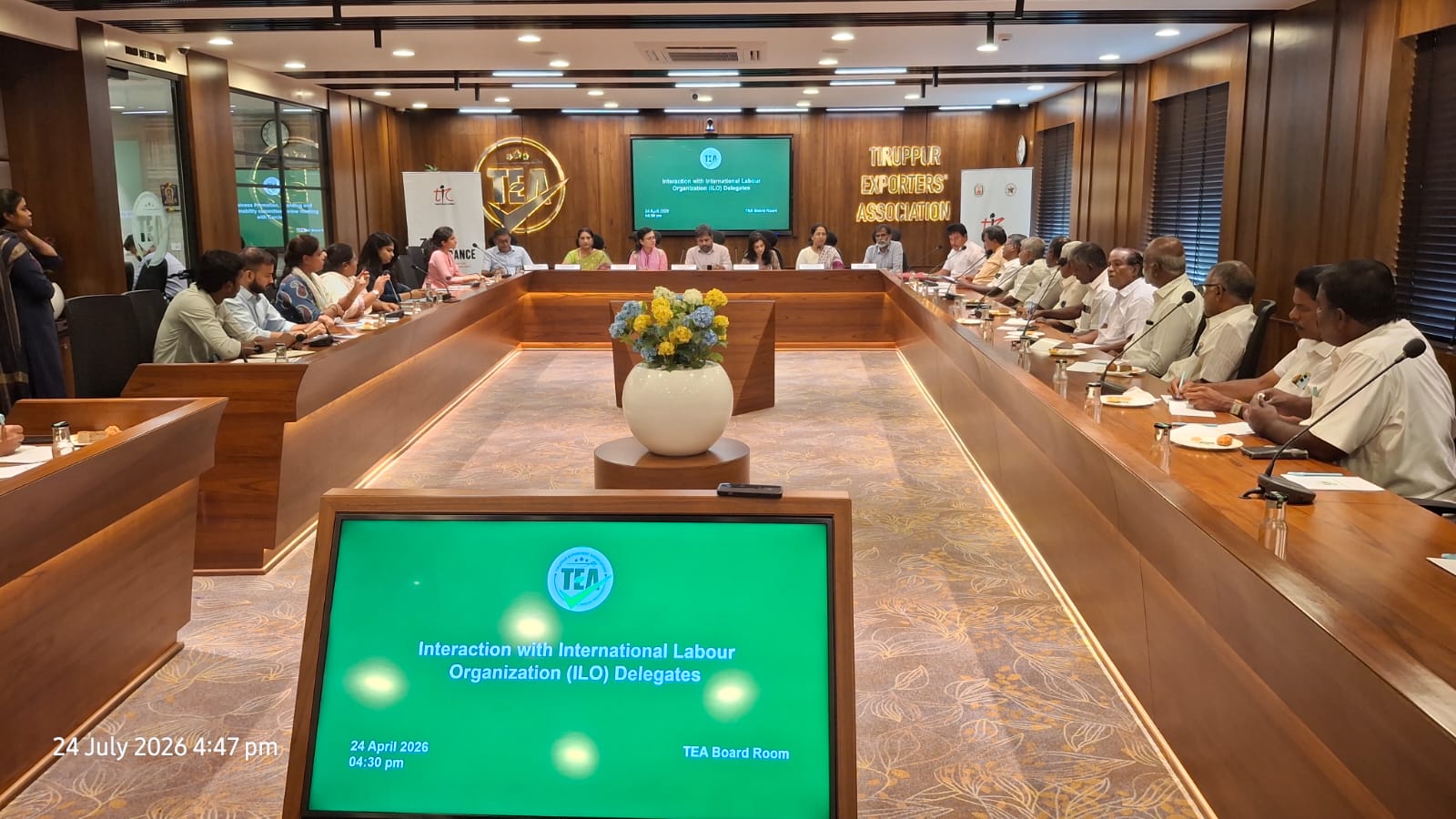
During the discussion, representatives of the trade unions emphasized the need for effective implementation of the Prevention, Prohibition and Redressal provisions of the POSH Act and urged the ILO to convey workers’ concerns and field-level realities to the Government. They also expressed concern over the impact of the changes in the Labour Codes on workers’ rights, highlighted occupational health and safety issues faced by textile workers, and called for strict enforcement of the eight-hour workday, fair minimum wages, stronger factory inspections, and mandatory weekly holidays.
Mrs. Sumita Roshan, Special Invitee, TEA proposed vote of thanks.
The programme was attended by Mr. M. Anand, Joint Secretary, TEA; Labour & Labour Welfare Subcommittee Chairman Mr. N. Krishnamoorthy, Mrs. V. Surithi, Vice Chairman, Women Empowerment Subcommittee; Labour & Labour Welfare Subcommittee member Mr. P. Thangavel; and representatives of trade unions—Labour Progressive Federation (LPF), Indian National Trade Union Congress (INTUC), Marumalarchi Labour Front (MLF), Centre of Indian Trade Unions (CITU), Hindu Mazdoor Sabha (HMS), All India Trade Union Congress (AITUC), Bharatiya Mazdoor Sangh (BMS), Anna Thozhilalar Peravai (ATP), Banian Thozhilalar Munnetra Sangam (DTMS) and All India Central Council of Trade Unions (AICCTU).