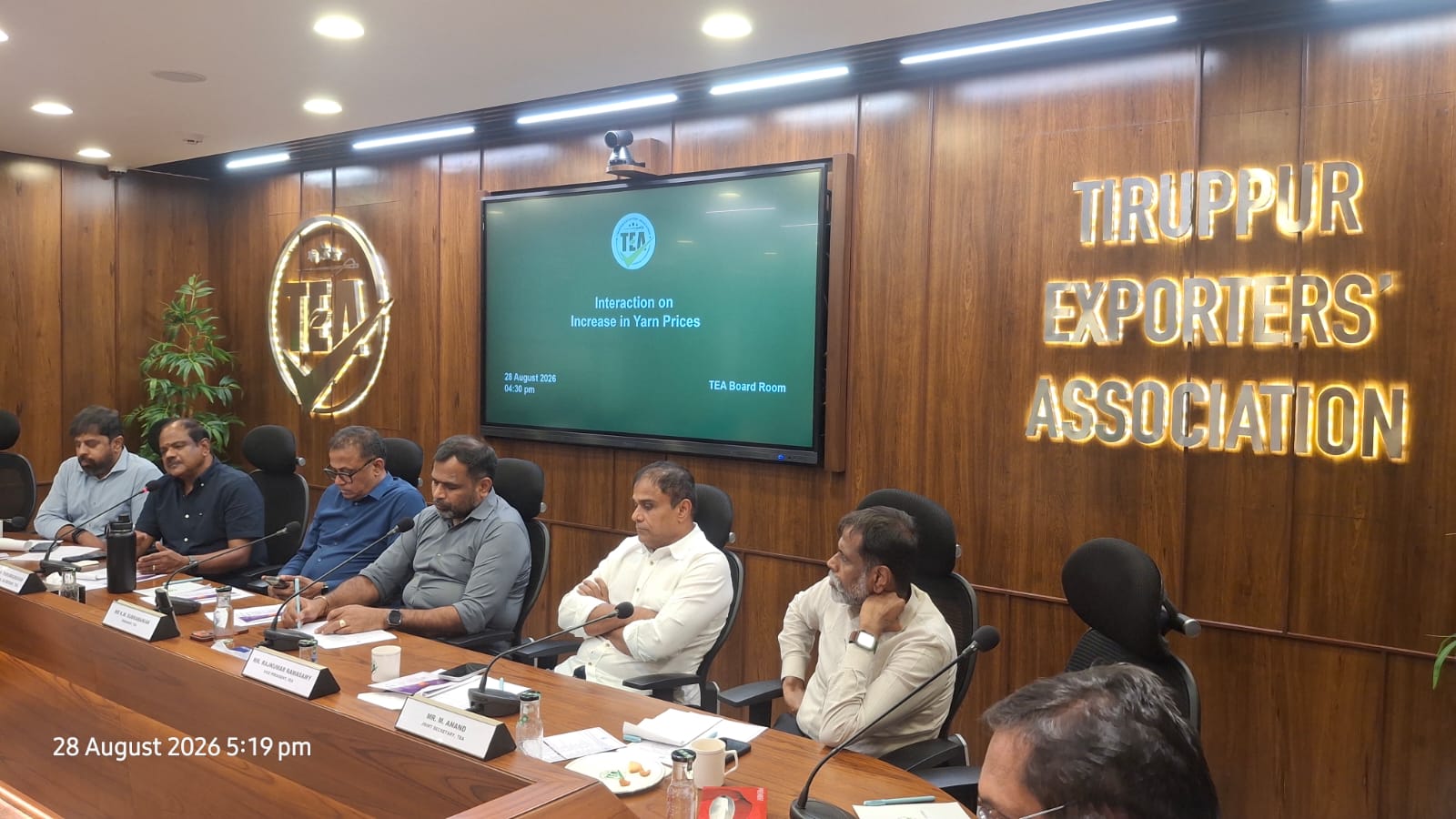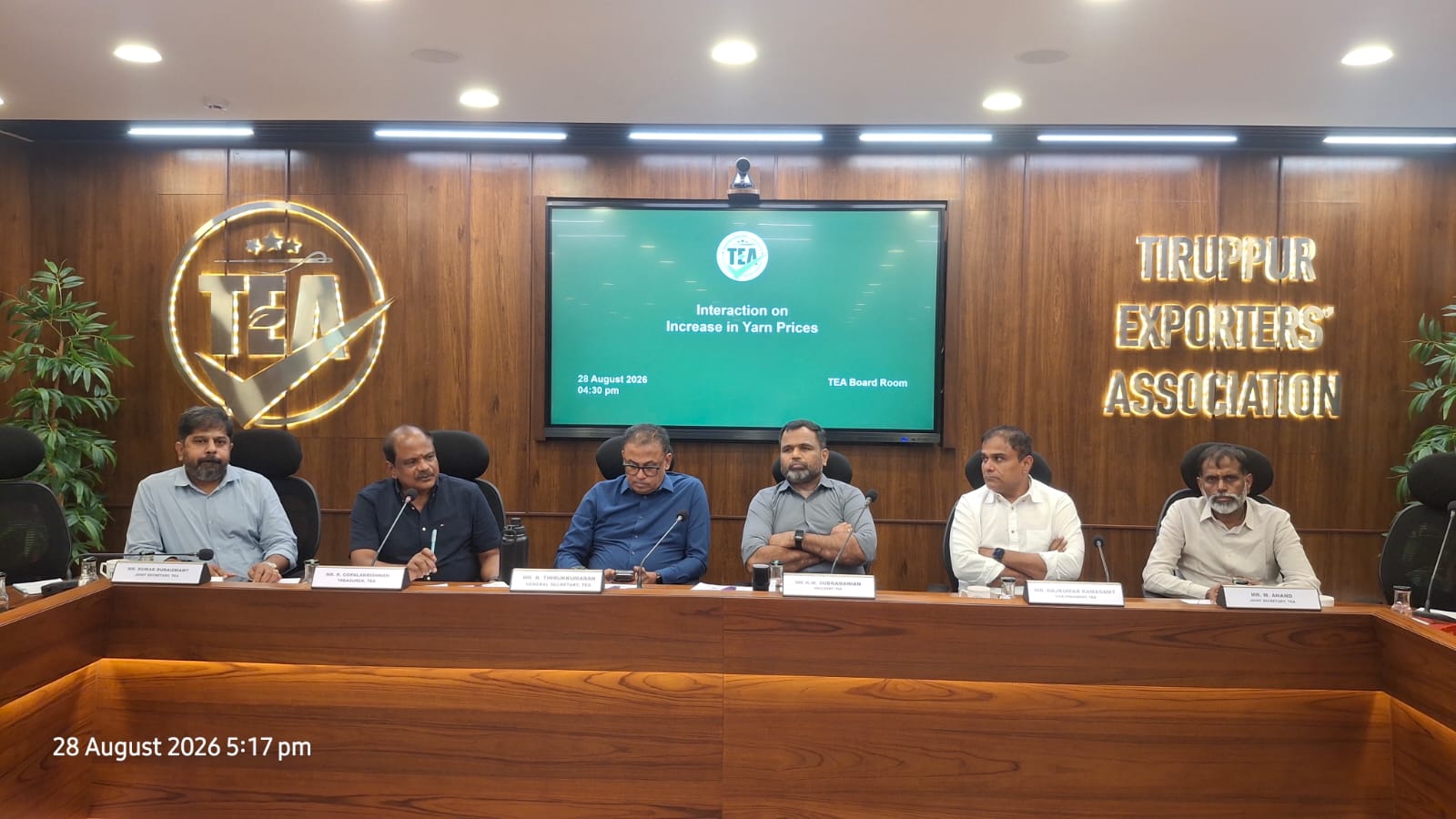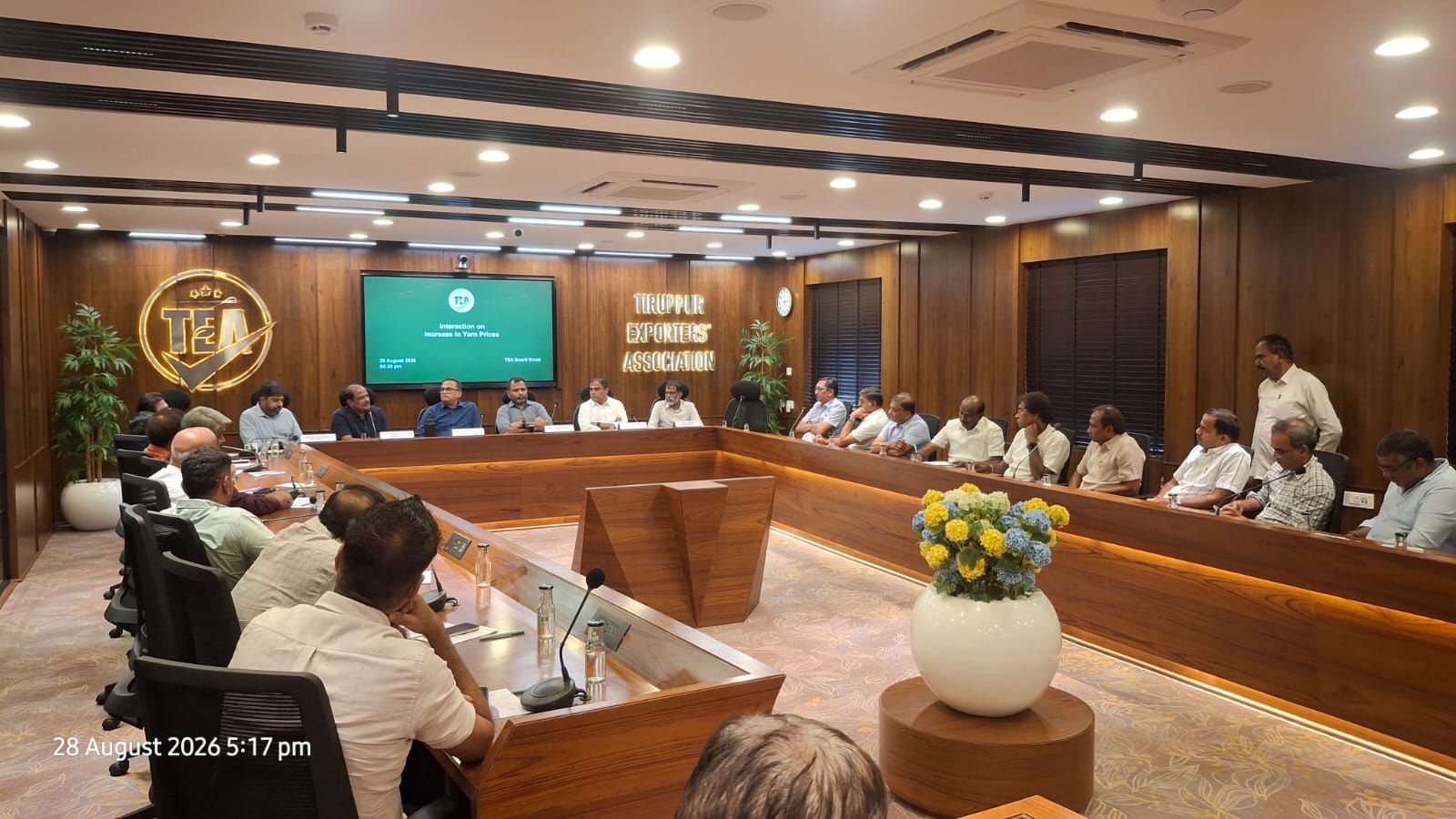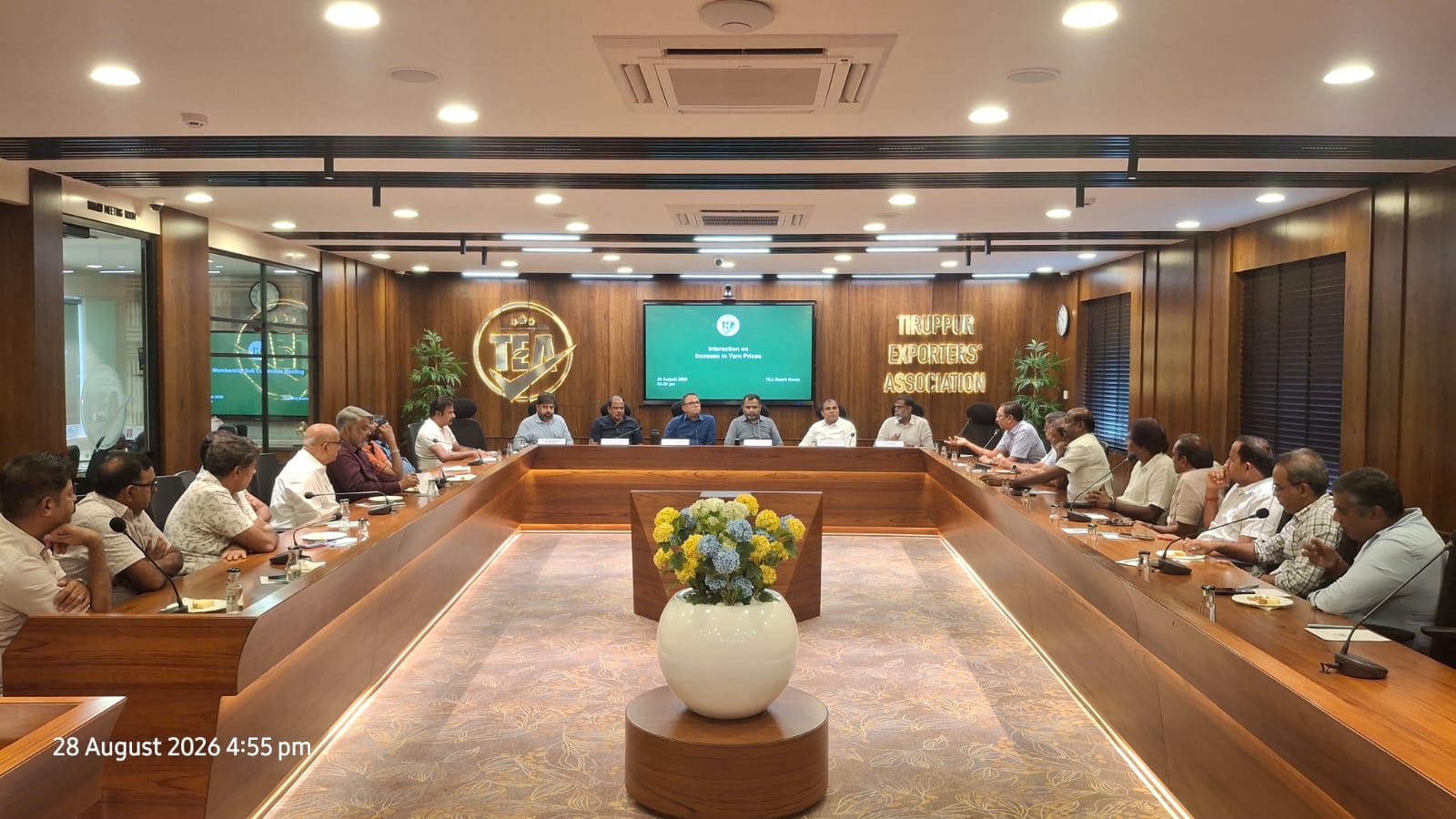
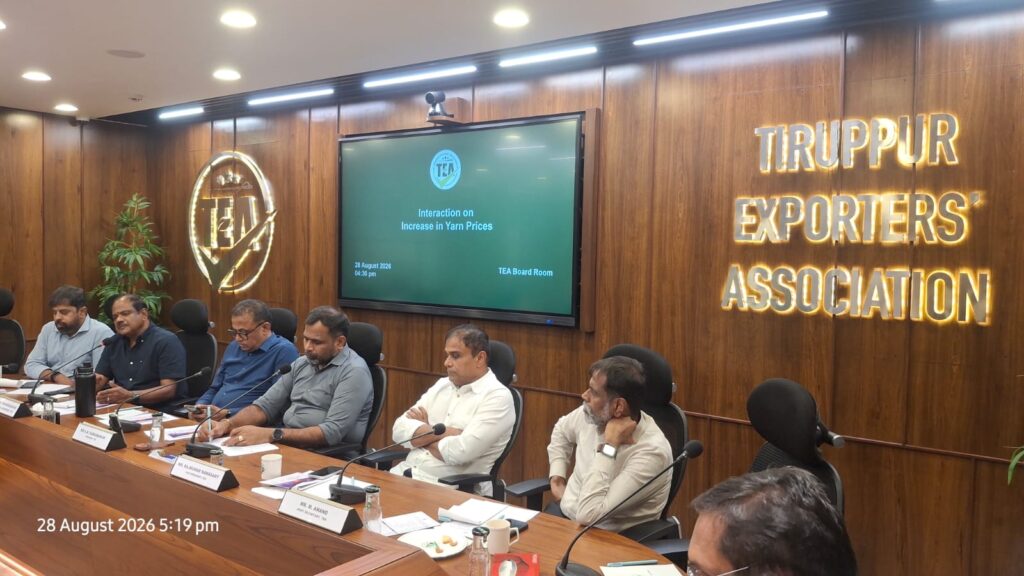
Mr. N. Thirukkumaran, General Secretary, TEA welcomed the office-bearers and members of the Association to the consultative meeting held to discuss the increase in yarn prices. He stated that the meeting had been organised to deliberate on the current situation prevailing in the textile and knitwear industry.
Mr. Kumar Duraiswamy, Joint Secretary, TEA, stated that the increase in yarn prices and the shortage of cotton were creating a major crisis for the textile industry. He pointed out that India was facing a shortage of around 10 lakh bales of cotton and stressed the need to extend the import duty exemption on cotton and increase domestic cotton production through the Cotton Mission. He further stated that exporters should deliberate on measures such as arranging additional working capital, entering into long-term procurement agreements, and establishing a Yarn Bank to address supply disruptions from spinning mills and manage price volatility.
Mr. R. Gopalakrishnan, Treasurer, TEA, stated that cotton prices were increasing due to the prevailing international market conditions and the decline in production. He pointed out that spinning mills were operating with low margins and maintaining cotton stocks sufficient for only four to six weeks. He urged the Government to extend the import duty exemption on cotton and take necessary measures to control the increase in prices.
Mr. Rajkumar Ramasamy, Vice President,TEA , stated that yarn prices in the global market fluctuate based on demand and supply, and the industry should adapt accordingly. Considering the financial challenges faced by spinning mills, he urged the Government to extend the import duty exemption on cotton and introduce suitable policy measures to strengthen domestic production and enhance the international competitiveness of the textile industry.
Mr. K. M. Subramanian, President, TEA stated that the import duty exemption on cotton has been extended until October. In view of the shortage of quality cotton and the resulting shortage of yarn in the domestic market due to increased yarn exports, he urged the Government to extend the import duty exemption on cotton for a further period of six months. He also called upon the Government to take necessary steps to modernise old spinning mills by enhance subsidies for the textile sector. He further requested that the Cotton Corporation of India (CCI), instead of fixing cotton prices on a daily basis, should determine the prices once a month.
Measures Unanimously Recommended at the Meeting Following the Deliberations
- Yarn Price Fixation: Spinning mills should fix yarn prices only once a month. A formal representation in this regard will be submitted in writing, and the matter will also be taken up through a spinning mills associations.
- Uninterrupted Yarn Supply: Spinning mills will be urged to ensure the continuous and uninterrupted supply of yarn under all circumstances.
- Extension of Cotton Import Duty Exemption: The Government of India will be requested to extend the import duty exemption on cotton for a further period of six months.
- Cotton Price Fixation: The Government and the CCI will be requested to avoid frequent changes in cotton prices and instead fix the prices once a month.
- Cotton Allocation: The CCI will be requested to allocate the required quantity of cotton to spinning mills on a proportionate basis, taking into account their production capacity
- MSP and Sale Price: The CCI will be requested to ensure that the price fixed for the sale of cotton remains reasonable and does not deviate excessively from the Minimum Support Price (MSP) fixed for farmers.
- Yarn Price Forecast: A yarn price forecast report will be provided to the Association’s members once every 15 days by the association.
- Appointment of a Professional Consultant: The Association will appoint a professional consultant to study abnormal fluctuations and increases in yarn and cotton prices and recommend appropriate measures to address the situation.
Mr. M. Anand, Joint Secretary,TEA, proposed the vote of thanks.
The meeting was attended by Executive Committee Members Mr. Ramu Shanmugam, Mr. K. Hari Prakash, Mr. C. Elango, Mr. D. Prem Aggarwal, Mr. K. Mezhiselvan, Mr. R. Sundar, Mr. V. P. Senthil Kumar, Mr. N. A. Bupathi, Mr. M. Mahendran, Mr. M. Rathinasamy, Mr. R. Ramu, Mr. R. K. Sivasubramaniam, and Mr. R. Sakthivel; Special Invitee Mr. P. Thirunavukkarasu; Advisory Committee Member Dr. M. Veluswamy; Labour & Labour Welfare Sub-Committee Chairman Mr. N. Krishnamoorthy; Women Empowerment Sub-Committee chairman Mrs. Shruthika Sethu Madhavan; Membership Sub-Committee Members Mr. P. Viswanadan, Mr. K. Chandrashekar, and Mr. J. Venkatesan; and Member Mr. P. Prabhu.